Feeling Lonely in Your Relationship
You love each other. So why does it still feel like this?
You're in a relationship. You're not alone. And yet you feel lonely.
That particular kind of loneliness is hard to talk about. It's confusing from the inside. It can feel like ingratitude, or like something is wrong with you, or like a sign that the relationship is in worse shape than you thought. None of those things are necessarily true.
Feeling lonely in a relationship is actually one of the more common experiences couples go through, especially in long-term partnerships. It rarely means love is gone. More often, it means something about the connection has shifted, and neither person has quite found the words for what's missing.
What loneliness in a relationship actually looks like
It's not always dramatic. Sometimes it's just a quiet awareness that you've been in the same house all week and have barely said anything real to each other. Or that you share a bed but feel miles apart. Or that you could be having a hard day and your partner wouldn't know.
Sometimes it looks like:
- Going through routines together but feeling like roommates
- Craving conversation, but finding it hard to actually start one
- Feeling like your partner doesn't really see what's going on with you
- Noticing you share more of yourself with friends, a coworker, or a journal than with your partner
- Lying awake next to someone and still feeling alone
The thread connecting most of these is the same: closeness without real contact. Presence without connection. You're near each other, but not actually with each other.
Why it happens
Most couples don't drift into loneliness because of a single problem. It accumulates.
Life gets busy, and the real conversations get shorter. Work stress bleeds into evenings. Kids take up the bandwidth that used to go to each other. Phones fill the gaps that used to hold eye contact. Neither person is doing anything wrong, exactly. But slowly the texture of the connection changes.
Sometimes loneliness builds from unaddressed conflict. When one or both partners have stopped bringing things up because it doesn't seem worth the fight, they start sharing less. The relationship becomes a managed surface instead of a real one.
Sometimes it's an intimacy mismatch. One person wants more emotional closeness or physical affection and hasn't known how to ask. The unexpressed need turns into distance over time.
And sometimes it's something harder: a gradual uncoupling from shared meaning. The relationship that used to feel like it was going somewhere has become a stable, functional unit without much sense of direction. You're running the household together but not really building anything together.
The mistake most people make
The most common response to loneliness in a relationship is to go quiet about it. Either you tell yourself it'll pass, or you don't know how to bring it up, or you're afraid of what the conversation might open up.
The problem with staying quiet is that the loneliness doesn't stay quiet. It finds other expressions. Irritability. Withdrawal. A vague restlessness. Sometimes people start seeking the connection they're not getting at home in other places, not necessarily in harmful ways, but in ways that gradually widen the gap.
The other mistake is turning loneliness into an accusation. "You never really listen to me." "You're always on your phone." Those statements might be true, but they tend to produce defensiveness rather than connection. The conversation becomes about who's to blame instead of what's actually missing.
What can actually help
Name it as a need, not a complaint. "I've been feeling disconnected from you lately and I miss you" is a very different conversation than "You don't pay attention to me anymore." One opens a door. The other closes one. Leading with what you want rather than what you're not getting tends to go better.
Protect a window for real conversation. Not to talk about the calendar or logistics, but to actually check in with each other. What's weighing on you. What's been going well. What you've been thinking about. Even 20 minutes, consistently, can shift the baseline. The daily rhythms of a relationship either build connection or erode it. There's not much neutral ground.
Get curious again. Loneliness often has a strange quality in long-term relationships: both people think they already know each other so well that there's nothing new to discover. But people change. What your partner wanted five years ago may not be what they want now. What brought them satisfaction may have shifted. The couples who stay connected don't assume they know each other. They keep asking.
Address the things you've been not saying. Loneliness and unspoken resentment tend to travel together. If there's something you've been swallowing, something that keeps coming up privately but never makes it into the relationship, that silence has a cost. Not every grievance needs to become a conversation, but the ones that have accumulated weight do.
Consider what you're actually craving. Sometimes what shows up as loneliness is something more specific: you want to feel desired, or understood, or like your partner is proud of you, or that you're building something meaningful together. Getting clearer on what you're actually hungry for makes it easier to ask for it.
When to take it more seriously
The loneliness that comes from a busy stretch, a hard season, or a slow drift is usually workable. Couples find their way back to each other from that kind of distance all the time.
But persistent loneliness, the kind that doesn't lift even when things are calm, or the kind that comes with a feeling of fundamental incompatibility, is worth paying closer attention to. If you've tried to bridge the gap and your partner has consistently been unwilling to meet you there, that's different information than mutual neglect.
Couples therapy can be useful well before things feel crisis-level. Not because something is broken, but because a good therapist can help both people articulate what they've been struggling to say to each other, and hear things they've been struggling to hear.
The thing worth remembering
Feeling lonely in a relationship doesn't mean the relationship has failed. It means the connection needs attention.
Most relationships go through stretches where the closeness is thin. What separates the ones that recover from the ones that don't usually isn't the depth of the problem. It's whether both people are willing to acknowledge it and do something about it.
Bringing up loneliness takes courage. You're admitting you need something, and you don't know exactly how it'll land. But it's also the first move toward changing it. Staying quiet is the slower version of giving up.
📚 Recommended Reading
As an Amazon Associate, we earn from qualifying purchases at no extra cost to you.
If any of these questions sparked something worth sitting with, these books go deeper than a list of prompts can.
Also worth reading
The Relationship Cure
John Gottman
Gottman's guide to building stronger bonds through everyday interactions — how small moments of connection (and disconnection) determine the health of a relationship.
View on Amazon →
Also worth reading
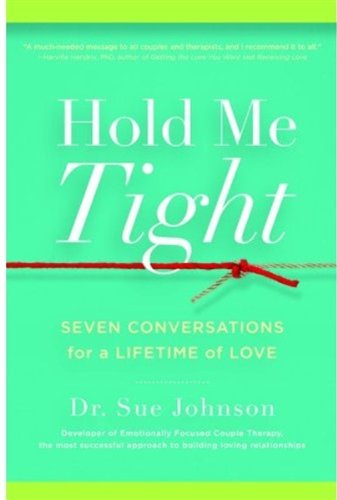
Love Sense
Sue Johnson
Sue Johnson draws on the latest neuroscience to show that romantic love is a biological attachment bond — and gives couples the tools to build it for life.
View on Amazon →
Thinking about couples therapy?
If you feel lonely in your relationship, a therapist can help you figure out what's creating the gap and how to close it. Online-Therapy.com matches you with a licensed therapist and includes worksheets you can use between sessions.
Start with Online-Therapy.com →Get 20% off your first month when you start through our link.
Affiliate link — we may earn a commission at no extra cost to you.
Looking for questions to start the conversation?
Sometimes it's easier to reconnect through questions than to find the right words on your own.
More on connection and distance
Loneliness in relationships often goes hand in hand with emotional distance, burnout, and unspoken needs. These articles cover the related territory.
Written by D.J. Westbrooks. I'm not a licensed counselor, just a 50-something who's been married 28+ years and has spent years reading what actual relationship researchers (Gottman, Johnson, Nagoski, Tatkin, Hendrix, Perel) have to say about what makes marriages last. This article is built from their work, not from a clinical degree. More about how this site gets made.
This site is not therapy. If your relationship is in real trouble, talk to a licensed professional.