How to Support a Grieving Partner Without Making It Worse
You want to help. Most people don't know how. Here's what actually works.
When your partner is grieving, you're in an uncomfortable position. You love them and you want to help, but grief doesn't respond to fixing. Nothing you say will make the loss smaller. You can't move the timeline or take away the pain. And yet you're right there, watching someone you love hurt.
Most people default to the same mistakes: filling the silence with reassurances, suggesting the person should be feeling better by now, or trying to find a silver lining when there isn't one. These aren't bad impulses. They come from wanting to help. But they almost always land wrong.
Supporting a grieving partner well is one of the harder things a relationship asks of you. It requires you to stay present with someone else's pain without trying to resolve it. That takes more from you than most support does.
Grief doesn't follow a schedule
You've probably heard of the "five stages of grief": denial, anger, bargaining, depression, acceptance. They've become cultural shorthand for how grief is supposed to work. The problem is that's not actually how grief works for most people.
The psychologist David Kessler, who worked with grief researcher Elisabeth Kübler-Ross, has written extensively about how the stage model was never meant to be a prescription. Grief is nonlinear. Someone can feel acceptance one afternoon and raw anger the next morning. They can seem fine for weeks and then fall apart on a random Tuesday. The stages, if they appear at all, move in all directions.
This matters for partners because the instinct to track "how far along" someone is in their grief can add pressure to the grieving person. When your partner seems better for a few days and then crashes, that's not a setback. That's normal. Not treating it like a setback is one of the most important things you can do.
What grieving people actually need
Grief researcher Pauline Boss, who coined the term "ambiguous loss," describes what grieving people tend to need most: presence, not solutions. Someone to witness the loss with them. Someone who doesn't need the grief to wrap up in a reasonable timeframe so their own discomfort can end.
In practice, that looks like:
- Being physically present. Not always talking. Just being in the room. Sitting next to them. Holding a hand. Existing nearby without an agenda.
- Letting them talk about the person or thing they lost. Many grieving people say that friends and family stop saying the deceased person's name after a few weeks, as if mentioning them would be painful. But it's usually the opposite. Saying the name out loud, telling a story, asking what they miss. These keep the person real. They're not reminders of grief. They're acknowledgment that the loss mattered.
- Asking before doing. "Do you want to talk about it, or do you want company without conversation?" Not everyone grieving wants to process out loud. Some people need the opposite: distraction, normalcy, a conversation about something completely unrelated. Ask what would help rather than assuming.
- Handling logistics without being asked. When someone is grieving heavily, basic tasks become enormous. Cooking dinner, handling the laundry, managing things that need managing. Doing these without announcement takes one layer of weight off.
What usually backfires
These are the phrases and approaches that are well-intentioned but tend to make things harder:
- "They're in a better place." Even if your partner believes this, it doesn't make the absence easier. It can feel dismissive of the pain.
- "At least..." Any sentence that starts with "at least" is asking the grieving person to feel grateful in the middle of hurt. It lands as an argument against their grief.
- "I know how you feel." You don't. Even if you've also lost someone. Every grief is specific to the relationship and the person experiencing it. Saying "I don't know exactly how this feels for you, but I'm here" is more honest and usually more comforting.
- "You should be feeling better by now." This one is damaging even when said gently. It tells a grieving person that their timeline is wrong, which adds shame to pain.
- Jumping too quickly into practical solutions. In early grief especially, the urge to help can push partners toward researching therapists, organizing donations, or making plans before the person is ready for any of that. Let them lead the pace.
The hard part: taking care of yourself too
When you're the partner of someone who's grieving, you're in a secondary caregiver role. That role is real and it costs something. You may be absorbing some of the emotional weight, carrying more household responsibility, and setting aside your own needs to prioritize theirs. That's appropriate in the acute phase of grief. It's not sustainable indefinitely.
Grief researcher and therapist Francis Weller writes about how grief needs community, not just one person. As a partner, you're not meant to be someone's only support. Over time, a grieving person benefits from a wider net: friends, family, a therapist, a support group. Gently encouraging that expansion isn't abandonment. It's healthy.
For yourself: stay connected to your own support people. Let yourself acknowledge that this is hard on you too. Suppressing your own experience so you can show up for your partner is unsustainable. You can have both (your own feelings and theirs) without one canceling out the other.
When grief is affecting the relationship
Heavy or prolonged grief changes a relationship. Your partner may be emotionally unavailable for a period. Physical intimacy may slow or stop. The balance of responsibility in the household may shift. You may feel lonely inside the relationship, which can create its own kind of guilt: "I shouldn't feel this way when they're the one suffering."
These feelings are normal. Feeling lonely isn't a sign that you're a bad partner. It's a sign that grief has temporarily changed the dynamic between you, and that a part of you is mourning that change. That deserves acknowledgment too.
If your partner's grief has been severe for many months and is affecting their ability to function in daily life, what's sometimes called complicated grief or prolonged grief disorder may be a factor. This is a recognized condition, distinct from typical bereavement, that often responds well to specific therapeutic approaches. A gentle conversation about talking to someone professionally (framed as wanting to get more support than you alone can provide) is usually received better than suggesting something is wrong with them.
The simplest thing
When you don't know what to do, doing less is almost always better than doing more. You don't need a speech. You don't need to have the right words. You don't need to fix it or explain it or move it along.
"I love you and I'm not going anywhere" covers most of it.
Grief asks the people around it for patience and steadiness more than anything else. Show up. Stay present. Don't make the grief about you and your discomfort. Let them lead.
Over time, those things build something between you. Not in spite of the hard season, but partly because of it. Couples who show up for each other in the worst moments often carry something forward from that: a knowledge of what the other person is actually capable of, and what the relationship can hold.
📚 Recommended reading
As an Amazon Associate, we earn from qualifying purchases at no extra cost to you.
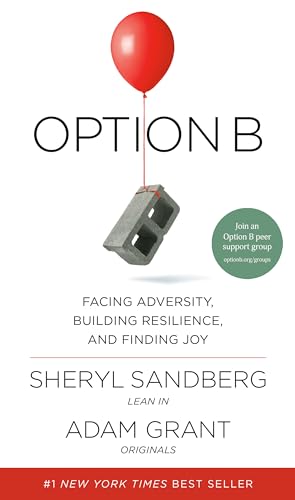
If any of these questions sparked something worth sitting with, these books go deeper than a list of prompts can.
Also worth reading
Hold Me Tight
Sue Johnson
Dr. Sue Johnson's breakthrough guide using Emotionally Focused Therapy principles to help couples create secure, lasting bonds and repair relationship wounds.
View on Amazon →
Also worth reading
The Body Keeps the Score
Bessel van der Kolk
The definitive book on trauma: how it lives in the body and shapes all our relationships, and the therapies that can help partners heal together.
View on Amazon →
Thinking about couples therapy?
Grief is hard to support well, and it can put real pressure on a relationship. A therapist can help you both navigate it without losing each other in the process. Online-Therapy.com matches you with a licensed therapist and includes worksheets you can use between sessions.
Start couples therapy, 20% off your first month →Affiliate link: we may earn a commission at no extra cost to you.
Related reading
Looking for conversation questions?
We have 70+ curated question sets for every stage and situation in a relationship.
Browse All TopicsWritten by D.J. Westbrooks. I'm not a licensed counselor, just a 50-something who's been married 28+ years and has spent years reading what actual relationship researchers (Gottman, Johnson, Nagoski, Tatkin, Hendrix, Perel) have to say about what makes marriages last. This article is built from their work, not from a clinical degree. More about how this site gets made.
This site is not therapy. If your relationship is in real trouble, talk to a licensed professional.