Keeping Score in a Relationship: Why It Happens and How to Stop
Why the tit-for-tat trap forms and what actually breaks the cycle
You did the dishes three nights in a row. You noticed. Then your partner watched TV instead of handling something they said they'd handle. You noticed that too. You didn't say anything. You just... filed it away.
That's scorekeeping. And almost everyone does it at some point, even in good relationships.
The problem isn't that you notice imbalance. Some awareness of fairness is healthy. The problem is when you start running a mental ledger: tracking contributions, cataloguing effort, waiting for the scales to tip back. That's when scorekeeping stops being a signal and starts being a slow drain.
Why we keep score
Scorekeeping usually starts because someone's needs aren't being met and they haven't found a way to say so directly. Naming a need feels risky. It requires vulnerability, and vulnerability requires trust that your partner will receive it well. When that trust is shaky, tracking becomes a substitute. You're gathering evidence, partly to justify your own frustration, partly because you don't quite know how to raise it yet.
There's also a fairness instinct that runs very deep in humans. Research on equity theory in relationships (going back to work by Elaine Hatfield and others) shows that people who feel over-benefited (getting more than they contribute) report guilt, and people who feel under-benefited report resentment. The imbalance itself creates psychological discomfort. Keeping score is one way the mind tries to manage that.
It can also be a control mechanism. If you're keeping score, you have data. Data feels like power, or at least like a defense. "I have done more than you, and here is the proof" is a harder case to argue against than "I feel undervalued."
What it actually costs you
Scorekeeping reshapes the way you see your partner. Once you're in the ledger mindset, you start noticing every deficit and filtering out every contribution. Your partner does something kind. You think, "well, they owed me that." They fall short of something. You think, "exactly what I expected." The cognitive bias locks in. Goodwill erodes.
It also changes how you show up. When you're keeping score, you often start withholding. If they're not contributing, why should you? You stop initiating: affection, effort, repairs after conflict. You wait to see if they'll go first. They notice you've pulled back, but they don't know why, so they pull back too. The distance grows, and neither of you can fully trace it back to the original issue.
The resentment that builds in this cycle is particularly corrosive because it's quiet. It doesn't announce itself as resentment. It shows up as irritability, as reduced patience, as a kind of flatness toward your partner. You stop giving them the benefit of the doubt. Small things start to bother you that wouldn't have before. This is chronic, low-grade contempt forming, and John Gottman's research identified contempt as the single strongest predictor of relationship breakdown.
The tit-for-tat problem
A close cousin of scorekeeping is tit for tat: I'll match your energy, positive or negative. If you're warm, I'll be warm. If you're cold, I'm cold. It feels fair, and in theory it creates accountability. In practice, it spirals fast.
In conflict research, tit for tat means that negative exchanges escalate. Your partner is short with you, so you're short back. Now they're feeling justified in their irritation. Now you both are. The original trigger is already irrelevant. What's left is two people matching each other's worst behavior and calling it equal footing.
The couples who break out of this pattern usually do so because one person decides to interrupt it, to respond to a negative exchange with something unexpectedly warm, or at least neutral. This requires resisting the fairness impulse. It doesn't feel fair. It often works anyway.
What actually breaks the cycle
Say the thing you've been tracking
Most scorekeeping points back to something that hasn't been said directly. Behind the ledger is usually a real need: "I'm exhausted and I need more help." "I feel like my effort isn't seen." "I'm carrying more of this than I signed up for." Those are honest conversations. They're harder to have than building a mental case, but they're the only thing that actually addresses the root issue.
There's a difference between raising a real concern and dumping the ledger. "I've been feeling like I'm handling most of the household stuff and I'd like to talk about how we split it" is a conversation. "You never do anything and here's the list of everything you owe me" is a prosecution. The first one gives your partner something to respond to. The second one puts them on trial.
Give credit out loud
One practice that interrupts the ledger: start naming what your partner does do. Out loud. To them. Scorekeeping is a deficit-focused habit. Deliberately noticing and expressing appreciation for contributions builds a counter-habit. This isn't about talking yourself out of real concerns. It's about retraining where your attention goes.
Gottman's research found a roughly 5-to-1 ratio in emotionally healthy relationships: five positive interactions for every negative one. That ratio doesn't happen passively. It requires intentional investment: noticing, appreciating, expressing. If you're running a deficit there, scorekeeping will fill the gap.
Stop aiming for perfect fairness
This one is counterintuitive. Fairness is a reasonable goal in relationships. But tracking every contribution to ensure perfect equity tends to produce more resentment, not less, because no relationship actually balances out day to day. Life is uneven. Capacity fluctuates. Some weeks one of you carries more, then it shifts.
The question isn't whether each week is equal. It's whether both people feel like they matter, that their effort is valued, and that they can ask for what they need. That's a fundamentally different kind of fairness, one based on mutual care rather than tally marks. You can't track your way to it.
Check what the score is actually about
Sometimes the score isn't really about dishes or chores or who planned the last three dates. Those are the surface. Underneath there's often something about feeling undervalued, about whether your partner really sees your effort, about whether the relationship is still a genuine partnership. The scorekeeping is a symptom of something that needs a real conversation.
When the ledger keeps filling up despite your attempts to let it go, that's often the signal that the underlying issue needs to be named. Not the list of grievances. The thing underneath the list. "I've been feeling like what I do here is invisible" is the real conversation. Everything else is just evidence gathering for a case that doesn't need to be made.
If you're both doing it
Sometimes both partners are keeping score, each convinced they're the one carrying more. In those situations, it's almost impossible to settle the factual question: who's right, whose ledger is more accurate. And it doesn't really matter.
What matters is that both people feel depleted and unrecognized, which means something structural has broken down. The relationship has slipped into a transactional mode where everything is conditional. Getting out of that requires someone to do something unconditional. To give without tracking. To acknowledge without keeping a receipt. To act like a partner rather than an auditor.
That's not a permanent sacrifice. It's a way of resetting the register. Most couples who've been there can tell you that the moment one person genuinely stopped tracking and started just trying, things started to shift. Not immediately. But the direction changed.
📚 Recommended Reading
As an Amazon Associate, we earn from qualifying purchases at no extra cost to you.
If any of these questions sparked something worth sitting with, these books go deeper than a list of prompts can.
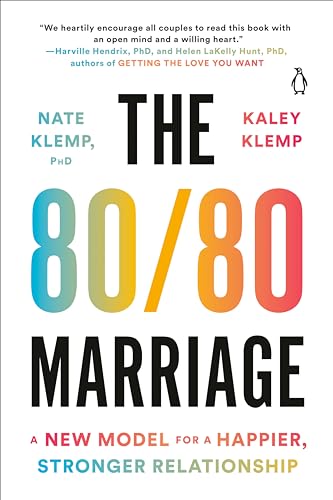
Also worth reading
Nonviolent Communication
Marshall Rosenberg
A powerful framework for compassionate communication that helps couples express needs and listen deeply, transforming conflict into connection.
View on Amazon →
Also worth reading
Us: Getting Past You and Me
Terry Real
Terry Real's guide to moving beyond ego and individualism in relationships — a practical roadmap for building genuine partnership and lasting love.
View on Amazon →
Thinking about couples therapy?
If keeping score has become the way you track the relationship, a couples therapist can help you let go of it. Online-Therapy.com matches you with a licensed therapist and includes worksheets you can use between sessions.
Start with Online-Therapy.com →Get 20% off your first month when you start through our link.
Affiliate link — we may earn a commission at no extra cost to you.
Ready for a more honest conversation?
Sometimes the first step is just getting the real stuff out in the open. These questions are built for that.
Written by D.J. Westbrooks. I'm not a licensed counselor, just a 50-something who's been married 28+ years and has spent years reading what actual relationship researchers (Gottman, Johnson, Nagoski, Tatkin, Hendrix, Perel) have to say about what makes marriages last. This article is built from their work, not from a clinical degree. More about how this site gets made.
This site is not therapy. If your relationship is in real trouble, talk to a licensed professional.