The Pursuer-Withdrawer Pattern: Why You Chase and They Pull Away
The more you push, the more they pull away. The more they withdraw, the more you pursue. Here's what's actually driving this cycle
You bring up something that's been bothering you. Your partner gets quiet. You push a little harder. They go quieter. You escalate (more urgent now, maybe louder) because silence feels like abandonment. They shut the conversation down entirely or physically leave the room. You feel unheard and panicked. They feel cornered and overwhelmed. Nothing gets resolved. And somehow, a few days later, you're back in the same argument.
This is the pursuer-withdrawer cycle. It's one of the most common and frustrating patterns in long-term relationships. And it almost always gets worse the longer it runs, because each person's behavior makes perfect sense as a response to the other's, which makes it very hard to see from the inside.
What's actually happening
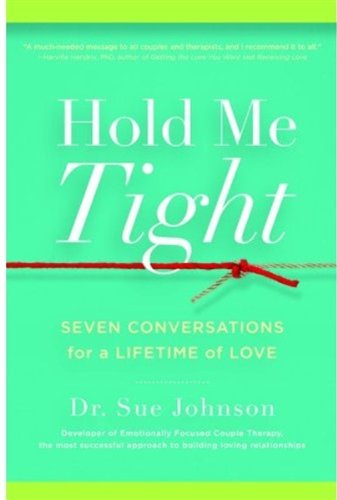
The pursuer-withdrawer pattern was described in depth by researcher John Gottman and is central to Emotionally Focused Therapy (EFT), developed by Dr. Sue Johnson. Both frameworks identify it as a primary driver of relationship distress, not because one person is the problem, but because the cycle itself becomes the problem.
Here's the basic structure: The pursuer is someone who, when feeling disconnected or distressed, moves toward their partner to restore contact. They initiate, push for conversation, and escalate when they don't get a response. This is often driven by anxiety about the relationship: a fear that the disconnection is meaningful, that if they don't fix it now, it'll calcify.
The withdrawer is someone who, when feeling overwhelmed or criticized, moves away from conflict. They go quiet, change the subject, or leave the situation. This is often driven by a sense of being flooded: too much emotional intensity, too fast, with no clear exit. Their withdrawal is usually an attempt to prevent things from getting worse, not an act of cruelty.
The maddening part: each person's behavior directly triggers the other's. The pursuer gets more anxious and presses harder as the withdrawer retreats. The withdrawer gets more flooded and retreats further as the pursuer escalates. Left uninterrupted, the cycle can go on indefinitely, with both people exhausted and neither feeling heard.
The withdrawer is not cold. The pursuer is not controlling.
One of the things that makes this pattern so hard to address is that from each person's vantage point, the other person is the problem.
Pursuers often describe their withdrawing partner as emotionally unavailable, avoidant, or not caring enough about the relationship. Withdrawers often describe their pursuing partner as demanding, relentless, or impossible to satisfy. Both interpretations feel true from the inside. Neither is actually accurate as a description of who that person is.
What's actually true is that both people are responding to the same underlying fear in different but mirroring ways. Pursuers fear abandonment and disconnection. Their escalation is essentially a desperate attempt to get contact, to get confirmation that the relationship is still there. Withdrawers fear being overwhelmed, failing, or making things worse. Their retreat is an attempt to get regulated, to stop the intensity before something gets said that can't be unsaid.
Sue Johnson's work in EFT is particularly useful here because it reframes the cycle in terms of attachment needs. Beneath the pursuing behavior is usually the message: "I need to know you're still here, that I still matter to you." Beneath the withdrawing behavior is usually: "I'm trying not to fail you, but I don't know how to get this right and I feel like I'm making it worse." Neither message gets delivered, because both people are too busy reacting to each other's surface behavior.
Why the cycle intensifies over time
In early relationships, most couples have enough goodwill and novelty to absorb difficult interactions. But over time, the pursuer-withdrawer pattern tends to solidify into roles. Each person becomes increasingly associated with their position in the dance: the one who always brings things up, the one who always shuts down.
Secondary effects pile on. The pursuer starts to anticipate rejection before the conversation even begins. They come in already activated. The withdrawer learns to brace for conflict the moment certain topics are raised. Their nervous system starts going defensive before a word is spoken. Both people become more reactive to each other, not less, the longer the pattern runs.
There's also often a secondary layer of resentment that builds. The pursuer starts to feel chronically unheard. The withdrawer starts to feel chronically criticized. These feelings (usually not spoken directly) begin to color everything, even interactions that have nothing to do with conflict.
What can actually change it
Breaking the cycle requires both people to do something uncomfortable: interrupt their own reflexive response, not just criticize their partner's.
Name the cycle, not the person
One of the most useful early steps is learning to talk about the pattern itself as the problem, rather than framing it as one person's flaw. "We're in that cycle again" is a fundamentally different conversation than "you always shut down" or "you never let things go." When both people can recognize the cycle as a shared dynamic, it creates a small but important shift in perspective. You're no longer adversaries; you're two people caught in the same trap.
For the pursuer: slow down before you escalate
Pursuer energy is driven by anxiety, and anxiety compresses time. Everything feels urgent. The moment of withdrawal feels like proof that the relationship is in crisis. But acting on that urgency typically makes things worse, not better.
What tends to work better is naming what's underneath the pursuit before escalating. Something like: "I notice I'm getting anxious right now. I think I need to feel like we're okay" lands very differently than a third attempt to force a conversation with someone who's already shut down. It exposes the vulnerability beneath the behavior, which gives the withdrawer something they can actually respond to.
For the withdrawer: stay in contact, even imperfectly
Withdrawers often leave conversations because they're genuinely overwhelmed and believe that stepping away prevents damage. That's often true in the short term. But the pattern of disappearing (without saying why, or when they'll return) is exactly what escalates the pursuer's anxiety.
The shift is learning to communicate the withdrawal instead of just doing it. "I'm getting flooded right now and I need twenty minutes" is not abandonment. It's information, with a time horizon. That's enough for most pursuers to stand down. What they can't tolerate is silence with no end in sight.
Gottman's research supports a structured break when one or both partners are flooded: at least twenty minutes, used to actually calm down (not rehearse arguments), with an agreement to return to the conversation. This works when both people trust that the conversation will happen, just not right now.
Get to the attachment message
The most lasting changes tend to come when both partners can access and express the underlying attachment need, not just the behavior. This is what EFT is specifically designed to help with. When a pursuer can say "I get scared that you don't want to be close to me" and a withdrawer can say "I pull away because I'm afraid I'm going to make it worse," the conversation changes character entirely.
That level of honesty is hard to get to on your own, which is why couples therapy tends to be particularly useful for this pattern. The cycle is self-reinforcing enough that an outside structure (a therapist who can interrupt the pattern in real time and help both people hear what they're actually saying) often makes the difference.
What if only one person changes?
The cycle is genuinely two-sided, which means change is most effective when both partners shift. But partial change still helps. A pursuer who learns to slow down and lead with vulnerability rather than pressure will find that less pursuit is actually needed, because the withdrawer has more space to come toward them. A withdrawer who learns to communicate during breaks rather than just disappearing will find that their partner escalates less, because the anxiety driving the pursuit has somewhere to land.
If the withdrawing partner specifically resists direct questions, it's worth reading about how to connect with a partner who hates being asked questions. The approaches there overlap heavily with what helps in this pattern.
The pattern doesn't require both people to change perfectly at the same time. It just requires both people to recognize they're in it.
The bottom line
The pursuer-withdrawer cycle is painful not because either person is cruel or broken, but because both people's instincts (to seek connection, to avoid overwhelm) collide in a way that leaves both of them feeling alone. The pursuer feels like they're reaching for someone who won't stay. The withdrawer feels like they're suffocating under demands they can't meet.
The way out isn't for one person to stop being themselves. It's for both people to learn to express what's underneath the behavior (the fear, the longing, the exhaustion) before the cycle gets going. That sounds simple. It's actually quite hard. But it's the kind of hard that leads somewhere.
📚 Recommended Reading
As an Amazon Associate, we earn from qualifying purchases at no extra cost to you.
If any of these questions sparked something worth sitting with, these books go deeper than a list of prompts can.
Also worth reading
Wired for Love
Stan Tatkin
Stan Tatkin explains how each partner's attachment style shapes the relationship — and gives couples a neuroscience-based roadmap for creating a secure, lasting bond.
View on Amazon →
Also worth reading
Attached
Amir Levine & Rachel Heller
Using attachment theory, this book explains relationship patterns and how understanding your attachment style can lead to healthier, more secure relationships.
View on Amazon →
Thinking about couples therapy?
If one of you always pushes and the other always pulls away, a couples therapist can help. Online-Therapy.com matches you with a licensed therapist and includes worksheets you can use between sessions.
Start with Online-Therapy.com →Get 20% off your first month when you start through our link.
Affiliate link — we may earn a commission at no extra cost to you.
Start a different kind of conversation
When the cycle is running hot, sometimes a structured question is the easiest way back in.
Written by D.J. Westbrooks. I'm not a licensed counselor, just a 50-something who's been married 28+ years and has spent years reading what actual relationship researchers (Gottman, Johnson, Nagoski, Tatkin, Hendrix, Perel) have to say about what makes marriages last. This article is built from their work, not from a clinical degree. More about how this site gets made.
This site is not therapy. If your relationship is in real trouble, talk to a licensed professional.