Conflict Style Questions for Couples
35 questions about how you each fight, what triggers you, and what it actually takes to repair
Why Talking About How You Fight Actually Matters
Here's something most couples never do: actually talk about how they argue. Not during or after a specific fight, but as a real conversation about their conflict styles: what they do under pressure, what they need in the middle of it, what repair looks like when it's over. That conversation is rarer than you'd think, and it explains a lot.
I've noticed that most recurring arguments between couples aren't really about the topic on the surface. They're about two people with different conflict styles colliding without ever having talked about those styles directly. One person needs to address things immediately, the other needs to cool off first. One person wants to feel understood before moving to solutions, the other wants to solve the problem to feel understood. Neither is wrong, but without ever naming that, they just keep replaying the same dynamics.
These questions are designed for that meta-level conversation, about how conflict works for each of you individually, where those patterns came from, what you're actually hoping for mid-argument, and what it would look like for things to genuinely go well. It's a more useful conversation than most couples have, and it tends to make the actual arguments shorter and less damaging. Questions like these connect directly to the work in understanding how couples repair after conflict and the dynamics that show up in stonewalling patterns.
Your Conflict Style Is a Two-Person Thing
Here's something I've noticed about conflict styles: they're a two-person phenomenon, but we usually answer the question alone. Ask someone how they fight and they'll describe their own internal experience. I need space. I want to resolve it now. I go quiet when I feel attacked. That's honest, but it's only half the picture.
The other half is how that style lands on the person across from you. What you experience as needing space, your partner experiences as being abandoned. What you experience as wanting to fix it fast, your partner experiences as being steamrolled. The gap between the style you think you have and the style your partner actually experiences is where most of the damage happens.
That's why these questions work best when each of you answers them twice. Once about yourself, and once about how you think your partner experiences you. The second pass is usually where the uncomfortable answers live. It's hard to hear that your need for space reads as rejection, or that your directness reads as an attack. But that's the information that actually changes how you fight.
How to Use These Questions
- ✓ Have this conversation when you are not in or just coming out of an argument
- ✓ The goal is to understand each other's wiring, not to critique it
- ✓ If a question makes you uncomfortable, that discomfort is worth naming
- ✓ "I don't know" is a real answer and often an honest one
- ✓ Some of these are easier to answer in writing first, then share out loud
The questions
1. What's your first instinct when an argument starts — do you go toward it or try to avoid it?
💭 Neither is wrong, but they're very different to be on the other side of.
2. When you're upset, do you need time alone first or do you prefer to address it immediately?
💭 This is one of the biggest mismatch points between couples.
3. What does it feel like in your body when you're starting to get angry — is there a signal you notice?
💭 Racing heart, tightness in the chest, a certain kind of quiet. Knowing this is useful.
4. What do you do when you feel overwhelmed or flooded in an argument and can't think straight?
💭 Flooding is real — when it happens, almost nothing useful gets said.
5. Have you ever 'won' an argument with a previous partner and felt worse afterward? What happened?
💭 Winning arguments in relationships is a strange kind of losing.
6. What's a word or phrase that almost guarantees things will escalate if someone says it to you mid-argument?
💭 Everyone has at least one. 'Calm down' is a popular candidate.
7. What topics do you find genuinely hard to argue about without getting defensive or shutting down?
💭 The topics where logic leaves and something more raw takes over.
8. Is there a pattern to when your biggest arguments tend to happen — tired, stressed, hungry, coming off a bad day?
💭 A lot of 'relationship' arguments are actually 'Thursday at 9pm after a long week' arguments.
9. Do you tend to bring up old grievances during arguments, or do you generally stick to what's in front of you?
💭 Be honest. This one matters.
10. When something bothers you, how long does it usually take before you say something?
💭 There's a whole spectrum from 'immediately' to 'never, actually.'
11. Have you ever gone silent as a way of punishing someone you were in conflict with, even if you didn't consciously mean to?
💭 The difference between needing space and using silence is worth knowing.
12. What do you think made you this way? Where did your conflict style come from?
💭 Family of origin, past relationships, a formative experience — usually something.
13. What's the thing you most need to hear when you're in the middle of an argument with someone you love?
💭 Not what you want them to do — what you need to hear.
14. Do you need to feel understood before you can start problem-solving, or can you do both at the same time?
💭 A lot of couples are on different ends of this and it creates a constant mismatch.
Worth a read
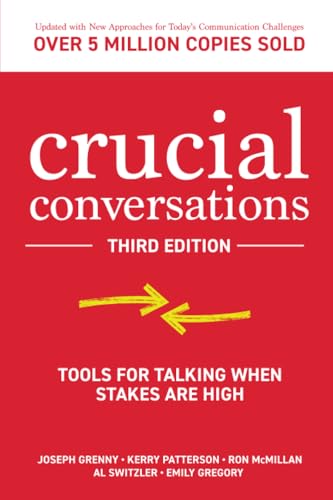
If you want a shared framework for the high-stakes conversations that keep coming up, by Kerry Patterson et al. is the most-cited book for that exact problem.
View Crucial Conversations on Amazon15. When you're upset, is it more important to you that your partner validates your feeling, or offers a solution?
💭 Feelings first vs. fix it first is one of the most common friction points.
16. How long after an argument before you feel back to normal? What does 'back to normal' look like for you?
💭 Some people bounce back in an hour. Others carry it for days.
17. What does a good repair after a fight look like to you? What actually makes you feel better — not just less upset?
💭 There's a difference between 'okay fine' and 'actually okay.'
18. Is there something you wish your partner understood about how you process conflict that you've never quite explained?
💭 This is a good one to sit with before answering.
19. Have you ever felt like you and a partner were arguing about the wrong thing — like the actual issue was something underneath?
💭 The presenting problem isn't always the real problem.
20. Do you think you apologize well? What does a real apology look like to you?
💭 An apology with a 'but' attached is doing something different than an apology.
21. Have you ever apologized just to end an argument rather than because you meant it?
💭 Most people have. It matters to know the difference.
22. What's the difference, to you, between expressing frustration and attacking the person?
💭 It's not always obvious in the moment.
23. When you feel criticized, what's your first reaction — and is that reaction usually helpful?
💭 Defensiveness is almost universal. It's also almost never useful.
24. Have you ever had a recurring argument that never really got resolved — just kept cycling back?
💭 Most couples have a few. What was it about?
25. What's something you've genuinely changed about how you handle conflict over time?
💭 Not aspirational — what have you actually gotten better at?
26. Is there a conflict habit you know you have that you wish you didn't?
💭 The ones we're aware of are at least workable.
27. What would 'conflict that goes well' look like to you? What does a productive argument feel like?
💭 It's worth having a shared image of what you're actually aiming for.
28. If you could agree on one 'rule' for how you argue that you'd both actually follow, what would it be?
💭 Something specific and realistic, not aspirational.
29. Is there a topic we've never argued about but probably should address before it becomes one?
💭 Sometimes the fight that hasn't happened yet is the important one.
30. What's one thing you've noticed about how we argue together that you think is actually working?
💭 Worth naming the things that are going right too.
31. Do you think you're a fair fighter? What would someone on the other side of an argument with you say?
💭 The two answers aren't always the same.
32. Have you ever said something during an argument that you regret — not just tactically, but genuinely?
💭 Something that revealed more about you than you intended.
33. What's the bravest thing you've ever done in the middle of a conflict?
💭 Could be saying something hard, backing down, walking away, or staying in it.
34. When you imagine us five years from now, what do you hope we've figured out about how we handle disagreement?
💭 The aspiration matters even when you're not there yet.
35. What's one thing you want me to know about what it feels like to be in conflict with you?
💭 The inside view is almost always different from the outside view.
Why These Questions Work
Most conflict conversations happen in the heat of things, which is exactly when people are least able to hear each other clearly. Your nervous system is activated, you're partly defending yourself and partly trying to land your point, and the nuance of what each person actually needs gets lost in the noise. By talking about conflict styles outside of an argument, you build a kind of shared map that both of you can refer back to when things are actually hard.
What tends to come out of questions like these is specific and usable: "I need to take a break and come back to it, but I will come back" is something a partner can work with. "I hate it when you say 'calm down'" is actionable. "I grew up in a house where conflict meant someone was getting hurt, so any raised voice puts me on edge" explains a pattern that would otherwise seem like an overreaction. This is information that actually changes how you navigate disagreements.
The last section (the honest reflection questions) tends to produce the most important answers. Most of us carry some awareness of our own less-flattering conflict habits: the tendency to bring up old things, the fake apology to end the argument, the silence that isn't neutral. Naming those things directly, in a non-defensive context, is surprisingly difficult. But when both people can do it, it creates a kind of accountability that helps. Not because you've promised to be perfect, but because you've seen yourself clearly and let your partner see you the same way.
Turn These Questions Around on Yourself
Here's the easy trap with conflict. You read through questions about how your partner fights and you start building a case about their style, their defensiveness, their tendency to shut down or escalate. That's the comfortable version, because your own style can look neutral from the inside. But every question here works just as well pointed at yourself, and that's usually where the uncomfortable answers live.
So go back through the questions and answer them about yourself. When an argument starts, what's your first move: go quiet, get loud, bring up old things, or shut the whole thing down? Do you actually listen, or do you just wait for your turn to talk? Do you say "I'm fine" when you're not, and then hold it against them later? When you're wrong, can you say so, or do you reach for a reason why it wasn't really your fault? Does conflict with your partner remind you of conflict with someone else? Which answers make you flinch, those are the ones to sit with.
The couples who fight well aren't the ones where nobody has a difficult style. They're the ones where both people can name their own patterns out loud. If you can say "I know I go quiet when I feel attacked, and that makes you feel abandoned," it changes the whole conversation. Instead of defending your style, you're owning it, and that makes room for both of you to actually work with what you're each bringing.
Frequently Asked Questions
What are the main conflict styles in relationships?
Research typically identifies a few patterns: pursuing (going toward conflict to resolve it), withdrawing (pulling back until things settle), escalating (intensity rises quickly), and avoiding (not raising issues at all). Understanding where you and your partner land helps explain a lot of recurring friction.
How do you talk to a partner about conflict styles without it becoming a fight?
Timing matters a lot. This conversation works best when you're both calm, not right after an argument. Frame it as mutual curiosity rather than complaint. The goal is understanding how each of you is wired.
Can conflict styles change over time?
Yes, though it takes awareness and practice. Most people default to the style they learned growing up, but that style can shift with intentional work, therapy, and a partner who creates the right conditions.
Why do I fight differently with my partner than with anyone else?
Because conflict style is relational, not fixed. It's a response to a specific other person. The way you fight with your partner is shaped by their style as much as yours. You might be the calm one with a friend and the escalating one with your partner, depending on what each relationship triggers.
What if my partner won't talk about conflict styles at all?
Start with yourself. Answer the questions about your own style and how you think it lands on them. Sometimes naming your own pattern out loud, without asking anything of them, opens the door. 'I know I go quiet when I feel attacked, and I'm trying to work on that' is a lot easier to hear than 'we need to talk about how you fight.'
Thinking about couples therapy?
If these questions are bringing up more than you can work through on your own, Online-Therapy.com matches you with a licensed therapist and includes worksheets you can use between sessions.
Start with Online-Therapy.com →Get 20% off your first month when you start through our link.
Affiliate link — we may earn a commission at no extra cost to you.
Keep the conversation going
Once you understand how you each handle conflict, the next step is building connection in the spaces between. Try the relationship check-in questions or browse all topics below.
Browse All Topics📚 Recommended Reading
As an Amazon Associate, we earn from qualifying purchases at no extra cost to you.
If any of these questions sparked something worth sitting with, these books go deeper than a list of prompts can.
Also worth reading
The Seven Principles for Making Marriage Work
John Gottman
Based on decades of research with thousands of couples, Gottman reveals the seven principles that predict whether a marriage will succeed or fail. A foundational guide for building lasting relationships.
View on Amazon →
Also worth reading
Us: Getting Past You and Me
Terry Real
Terry Real's guide to moving beyond ego and individualism in relationships — a practical roadmap for building genuine partnership and lasting love.
View on Amazon →
Need more conversation starters?
We have questions for every situation: date nights, big life decisions, rebuilding connection, and more.
Browse All Topics →