Parenting Philosophy Questions for Couples
35 questions to explore what you actually believe about raising kids, before you have to figure it out mid-tantrum
You don't need to agree. You need to be able to predict each other.
Most couples figure out their parenting philosophy on the fly. The first time something actually happens, like the first time your kid throws a fit in public or comes home with a bad grade or says something alarming about their body, you discover pretty quickly whether you and your partner are on the same page. And often, you're not. Not because either of you is wrong. But because you never actually compared notes.
Here's the thing I've come to believe about this after watching friends become parents. You don't need to agree on everything. In fact, you won't. The couples who handle it well are the ones who can predict each other. They know that when the kid loses it at bedtime, one of them will want to soothe and the other will want to hold the line. Neither is wrong, but knowing the other's default in advance changes everything. It turns a moment of feeling undermined into a moment you saw coming.
These questions to ask before having kids pull from both directions: what do you want to carry forward from how you were raised, and what do you want to leave behind. The scenarios in the questions below are the shortcut to your defaults. They get you familiar with where each of you is coming from before you're standing in the middle of a hard moment together.
How to use these questions
- ✓ Pick 3-5 questions per session rather than trying to tackle all of them at once
- ✓ The goal is understanding, not agreement. Disagreement is useful information too.
- ✓ When you hit a real difference, sit with it instead of trying to resolve it immediately
- ✓ The prompt under each question is optional. Use it if the conversation stalls.
- ✓ These work whether kids are hypothetical or already on the way
The questions
1. What's one thing your parents did that you'd want to carry into how you raise kids?
💭 Not what you think you're supposed to say: what actually stuck with you as good.
2. What's something from your childhood you'd specifically want to do differently?
💭 This one tends to reveal a lot about what didn't feel right growing up.
3. How were emotions handled in your house growing up? Was it okay to cry, get angry, show fear?
💭 Most couples have different emotional cultures from their families. Worth knowing.
4. What role did discipline play in your childhood? What did it look like?
💭 Discipline is one of the biggest places couples discover they have different defaults.
5. Were you given a lot of independence as a kid, or was the environment more structured and controlled?
💭 Neither is objectively right. But you probably have a strong pull toward one or the other.
6. What did your family do well that you want to replicate?
💭 Even complicated families usually have a few things that worked.
7. If you had to name the three most important values you'd want to raise a child with, what would they be?
💭 Honesty, kindness, ambition, curiosity: what matters most to you?
8. How do you think about the balance between structure and freedom for kids?
💭 Routines vs. flexibility. Rules vs. exploration. Where do you land?
9. What does a 'good childhood' look like to you?
💭 Not the idealized version: what would you actually feel good about giving a kid?
10. How do you think about raising kids with or without religion?
💭 One of the bigger conversations couples often sidestep until it matters.
11. How important is academic achievement to you as a parent? What would you want to push, and what would you let slide?
💭 Some people care deeply about grades. Others care more about curiosity and process.
12. How do you think about money and kids? Allowances, working part-time as a teenager, paying for college?
💭 The financial values you pass on are worth thinking through before they come up.
13. What does your gut tell you about screen time for kids?
💭 This is a real battleground for a lot of families. What's your instinct?
14. How do you imagine handling it when your kid does something that really disappoints or frustrates you?
💭 Your honest answer matters more than the ideal answer here.
15. How do you think about activities, sports, music, and after-school stuff? Lots of it or space to just be a kid?
💭 The overscheduled kid vs. the bored kid: where's your comfort zone?
16. Do you think kids should hear their parents fight sometimes, or should conflict always be private?
💭 There are real arguments on both sides. What feels right to you?
17. How do you think about honesty with kids? Do you believe in age-appropriate truth or protecting them from hard things?
💭 Santa Claus is one version of this. Harder topics are another.
18. What do you think about apologies from parents to kids? Should parents say sorry when they get something wrong?
💭 Not obvious. Some people grew up in houses where parents never admitted fault.
19. When you picture your life with kids, what do you see each of you being primarily responsible for?
💭 Day-to-day logistics, emotional labor, discipline, school stuff: how does it split?
20. How do you feel about one parent staying home versus both working?
💭 What's the preference and what's the reality given your situation?
21. How do you think about childcare? Daycare, family help, nannies, one of you at home? What's your comfort level?
💭 People have strong feelings about this. Better to surface them early.
22. What do you think is going to be the hardest part of parenting for you specifically?
💭 The thing you're least naturally equipped for, if you're being honest.
23. What do you think is going to come naturally to you as a parent?
💭 What strength do you bring that a kid would actually feel?
24. How big a role do you see grandparents playing in your kids' lives?
💭 Practically and emotionally: how involved do you want extended family to be?
25. How would you navigate it if your parents had very different ideas about how kids should be raised?
💭 Because they will. What's your default when the grandparents weigh in?
26. What community do you imagine raising a kid in? City, suburb, small town? Why?
💭 People often haven't thought through how much where matters for parenting.
27. How important is it to you that your kids know your family's heritage, culture, or history?
💭 Language, traditions, stories, food. What do you want to pass down?
28. How do you think you'd handle it if your kid turned out very different from what you expected: different values, different path, different identity?
💭 The unconditional love question, asked more practically.
29. What would you do if you and I disagreed on a major parenting decision, something that actually mattered to both of us?
💭 This is a rehearsal conversation worth having before it's real.
30. How do you feel about talking to kids about mental health, therapy, and getting help when you need it?
💭 Whether you normalize this early has lasting effects.
31. What would you want to do differently than your parents did when it comes to talking about sex, bodies, or relationships?
💭 A lot of people got nothing. What do you want to actually pass on?
32. How do you think about failure and kids? Should they be protected from it or allowed to experience it?
💭 The gritty resilience vs. the confidence-building comfort argument.
33. How would you want to handle it if a child came to you with something you didn't know how to respond to?
💭 Big feelings, hard questions, things you weren't prepared for.
34. What do you hope your kid would say about their childhood when they're 35?
💭 Backward from the outcome. What's the feeling you'd want them to carry?
35. What kind of relationship do you want to have with your kid when they're adults?
💭 Friends? Respectful and close? How they check in. What that looks like.
Why these parenting questions work
What I've noticed about parenting disagreements is that they're rarely really about the thing they're about. They're about the underlying belief. One person thinks kids need structure because they grew up with chaos and craved order. The other thinks kids need freedom because they grew up over-controlled and still feel it. Neither is wrong. But if they never surface those origins, they just keep having the same argument, which is really a different argument.
These questions for couples discussing having kids work because they go one layer deeper than "what would you do in this situation." They ask about where you're coming from. What shaped you. What you've decided to keep and what you've decided to leave behind. That's the raw material of parenting philosophy. Everything else flows from there.
You're not going to answer all of these perfectly. You're going to hedge on some. You're going to change your mind later on others. That's fine. The point isn't to arrive at a finished parenting plan, and it isn't to prove you agree. The point is to know each other's defaults well enough that when you're both tired and a kid is losing their mind and you have about four seconds to make a call, you can predict what the other person is going to do, and that prediction keeps you from feeling like you're parenting alone.
Common questions
When should couples talk about parenting philosophy?
Before you need to. Ideally before expecting, but any time you are in a serious relationship where kids are plausible. These conversations are easier when they are still hypothetical.
What if my partner and I have really different parenting ideas?
That is worth taking seriously, but it does not have to be a dealbreaker. Some differences are workable with planning. Others point to deeper value conflicts. Knowing early gives you time to work through it.
What are the most important parenting topics for couples to discuss?
Discipline approach, division of labor, extended family, religion and values, screen time, and how each of you handles stress. Those are the ones that show up daily once you have kids.
Can parenting style differences actually end a relationship?
They can, when the difference never gets talked about and each person feels undermined in front of the kids. The problem is usually not the difference itself. It is the unspoken conflict it creates. Talking about it in advance makes it manageable.
How do we have these conversations without turning them into a fight?
Lead with curiosity instead of judgment. Ask why something feels right to them before you argue for your own position. Different childhoods produce different instincts, and understanding the source usually softens the disagreement.
More conversations worth having
Parenting philosophy is one piece. We have questions for future plans, values, commitment, and the harder conversations too.
Browse All Topics📚 Recommended reading
As an Amazon Associate, we earn from qualifying purchases at no extra cost to you.
If any of these questions sparked something worth sitting with, these books go deeper than a list of prompts can.
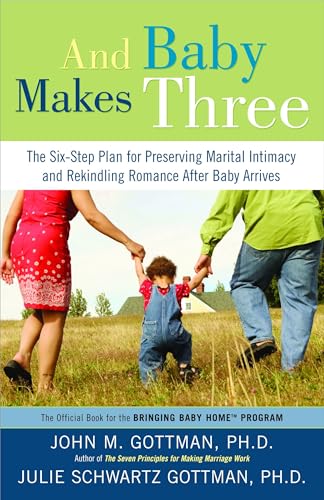
Also worth reading
What No One Tells You
Alexandra Sacks & Catherine Birndorf
A frank, empowering guide to the emotional experience of new motherhood: helping couples understand the mental and relational shifts that come with a new baby.
View on Amazon →
Also worth reading
The Whole-Brain Child
Daniel J. Siegel & Tina Payne Bryson
A revolutionary approach to child development that helps parents understand their child's brain, essential reading for couples navigating parenthood together.
View on Amazon →
Need more conversation starters?
We have questions for every situation, from early dating to long-term commitment.
Browse All Topics →