Harville Hendrix and the Imago: why you fell for who you fell for
The people who feel like home when you first meet them often bring up your oldest wounds. That's not bad luck. According to one of the most influential therapists in the field, it's by design.
Most people, when they think about why they fell for their partner, land on something like chemistry. An inexplicable pull. The sense that this person just fit. And that's accurate, as far as it goes. There was something there that felt unmistakably right.
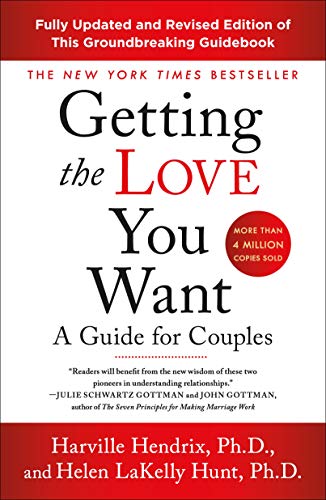
Harville Hendrix, the psychotherapist who developed Imago Relationship Therapy and co-wrote Getting the Love You Want with his partner Helen LaKelly Hunt, would say you're not wrong about the chemistry. He'd just add that the chemistry isn't random. The pull you felt had a very specific target, one shaped long before you ever met your partner, and understanding what that target was can explain an enormous amount about why your relationship unfolds the way it does.
What the Imago is
Imago is the Latin word for "image." In Hendrix's framework, it refers to the unconscious composite picture each of us carries of the ideal partner, formed in childhood from the emotional qualities, both positive and negative, of the people who raised us.
This isn't a portrait in the usual sense. It's more like an emotional fingerprint. The Imago captures not just the warmth and safety your caregivers provided, but also the specific ways they fell short: the ways they were unavailable, critical, distracted, overwhelming, withholding. The wounds alongside the gifts.
And the theory is that we are unconsciously drawn, with surprising precision, toward partners whose emotional profiles match that composite. Not just the good parts. The whole thing. Which is why the person who felt so right at the start often turns out to carry the specific qualities that make things hardest for you.
Hendrix describes it this way: romantic love isn't accidental. It's a purposeful movement of the psyche toward something unfinished. The person you choose carries the emotional map your unconscious has been carrying since childhood, and the goal (the one you didn't consciously sign up for) is to finally work through what couldn't be worked through back then.
Why we're attracted to familiar wounds
When we talk about chemistry, we often describe it as feeling like we've always known someone. Like they're familiar. Hendrix would say that's exactly what's happening, on a level below conscious awareness. You recognize this person. Their emotional profile matches the one you grew up with, which means being with them feels like home, even if home wasn't always comfortable.
This is why people who grew up with an emotionally unavailable parent often find themselves drawn to partners who are also, in some way, hard to fully reach. Or why someone raised in chaos tends to feel bored by ease and oddly activated by turbulence. The nervous system learned what love felt like early, and it goes looking for that feeling even when the rational mind knows it's not what it wants.
It's not self-sabotage. It's not masochism. It's the unconscious trying to solve an old problem with new material.
The power struggle isn't a sign you chose wrong
Hendrix maps the arc of most long-term relationships in two phases. The first is romantic love, that neurochemical flood where everything fits and your partner seems to reflect back exactly what you need. He describes this phase with some affection but also with clear eyes: it's real, but it's also partly the brain's way of getting you into the relationship before your defenses have a chance to talk you out of it.
The second phase is what he calls the power struggle, and it starts when that flood recedes. Suddenly the things that seemed charming become grating. You're having the same fight again. Your partner is doing the exact thing that gets under your skin most. You wonder, sometimes, if you made a mistake.
His argument is the opposite: "The power struggle is not a sign that you chose the wrong partner. It is a sign that you are in the right relationship."
The power struggle isn't evidence of incompatibility. It's the unconscious work surfacing: the old wounds being triggered by the one person in your life whose specific emotional profile is capable of triggering them. That's painful. It's also, in his view, the real invitation. Not to leave, but to look at what's actually being brought up and do something with it.
What to do with this
Knowing about the Imago doesn't make the friction go away. But it can change how you interpret it, which changes what you do with it.
The most common way couples experience the power struggle is as a problem with the other person: they need to change, the relationship needs fixing, maybe you're just incompatible. Hendrix's reframe is that the friction is a map: it's pointing toward something in you that predates this relationship, something that's been waiting for an opportunity to be seen and worked through.
That's not a reason to stay in a destructive relationship. It's a reason to get curious before concluding. When your partner does the thing that makes you react most strongly, the interesting question isn't just "why do they keep doing that?" It's also "why does this particular thing land so hard with me? Where did that start?"
One of the practical tools Hendrix developed for this is a structured dialogue process he calls Imago Dialogue, a form of conversation where one person speaks and the other mirrors back what they said, not to agree or disagree, but purely to show that they heard it. Then validates that it makes sense, from their partner's perspective. Then names what their partner might be feeling.
The mechanics sound simple. What they produce is surprisingly rare: the experience of being fully heard by the person whose opinion matters most. Most couples have never had that kind of exchange, because most conversations are two people waiting for their turn to argue. The dialogue structure interrupts that loop.
The bigger picture
What stays with me about Hendrix's work is the reframe on who our partners actually are. Not our opponents in a conflict. Not the person who inexplicably keeps doing the wrong thing. But (if you take his framework seriously) the person best positioned to help us heal what we've been carrying since before we could name it.
That doesn't make the relationship easier. In some ways it makes it more demanding, because it asks you to stay curious when every instinct says to defend or withdraw. But it points toward something useful: the people who challenge us most are often the ones we chose for a reason, even if it wasn't a conscious one.
Understanding the Imago won't resolve the power struggle. What it can do is turn it from a sign that something is broken into evidence that something important is being asked of you. Whether you engage with that or not is the actual choice.
📚 Recommended Reading
As an Amazon Associate, we earn from qualifying purchases at no extra cost to you.
If any of these questions sparked something worth sitting with, these books go deeper than a list of prompts can.
Also worth reading
Attached
Amir Levine & Rachel Heller
Using attachment theory, this book explains relationship patterns and how understanding your attachment style can lead to healthier, more secure relationships.
View on Amazon →
Also worth reading
Adult Children of Emotionally Immature Parents
Lindsay C. Gibson
A compassionate guide to understanding how emotionally immature parents shape our adult relationships — and how to heal those patterns with a partner.
View on Amazon →
Get curious about what you each carry
Some of the most useful conversations you can have with a partner are about where you came from, not to relitigate it, but to understand what you brought into the room.
Written by D.J. Westbrooks. I'm not a licensed counselor, just a 50-something who's been married 28+ years and has spent years reading what actual relationship researchers (Gottman, Johnson, Nagoski, Tatkin, Hendrix, Perel) have to say about what makes marriages last. This article is built from their work, not from a clinical degree. More about how this site gets made.
This site is not therapy. If your relationship is in real trouble, talk to a licensed professional.