Stan Tatkin's Islands, Waves & Anchors: which one are you, and why it matters
Tatkin's three archetypes don't describe your personality. They describe what your nervous system learned to do when love felt uncertain. That distinction makes them a lot more useful in an actual relationship.
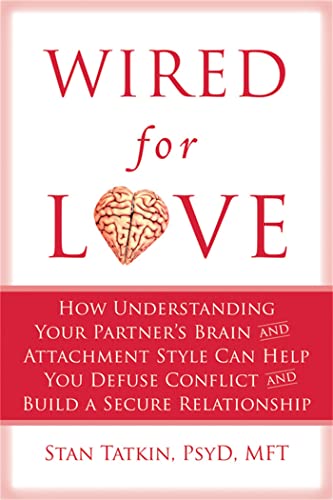
Stan Tatkin is a clinical psychologist and marriage and family therapist who developed something called PACT (Psychobiological Approach to Couple Therapy). His books, Wired for Love (2011), We Do (2018), and In Each Other's Care (2023), pull from neuroscience and attachment research to explain something most couples only vaguely sense: that what happens during a fight isn't really about what you're fighting about.
His framework builds on attachment theory, but with a specific focus. Not just attachment in the abstract sense, but how early wiring shows up in couple conflict specifically, under pressure, when the relationship feels at stake. That's what makes it different from general attachment content. Tatkin is interested in the body, the nervous system, and the moment things go wrong in real time.
He describes three archetypes: Islands, Waves, and Anchors. They're based on what you learned about depending on other people in early life. They're not a personality quiz. They're a lens for understanding why certain patterns keep recurring no matter how much you love each other and mean well.
What Islands learned
Islands developed early on that depending on others tends to get you hurt. The caregiving they received wasn't necessarily cruel. But it was emotionally unavailable, or it came with costs that made vulnerability feel risky. So they learned to self-regulate: to handle things internally, to not need too much from other people, to keep the emotional temperature down.
In a relationship, an Island can seem distant or hard to read. They often need real alone time to decompress. In conflict, they go quiet, withdraw, and sometimes feel genuinely unable to respond when the pressure is on. This looks like stonewalling from the outside. From the inside, it's more like overload: a nervous system that can't take in more input right now.
"Islands learned early that depending on others gets you hurt," Tatkin writes. That's not cynicism. It's the condensed logic of a survival system that worked well enough, until it met a partner who interprets withdrawal as abandonment.
Islands aren't cold. They're self-contained. There's a difference.
What Waves learned
Waves had a different early experience: caregiving that was inconsistent. Sometimes present and warm, sometimes not available. Not reliable enough to fully trust, not absent enough to give up on. The lesson that got wired in was: you have to reach for love or it disappears. You have to stay alert to signs that the connection is fading. You have to protest disconnection before it becomes permanent.
In a relationship, Waves tend to crave closeness and feel alarmed by distance. They can read a room quickly (often too quickly). Moods shift fast. In conflict, they pursue, ask for reassurance, and escalate when reassurance doesn't come. This reads as needy from the outside. It's actually a nervous system that's tuned for co-regulation and panics when it can't get it.
"Waves learned that you have to fight and grab for love or it disappears," as Tatkin puts it.
Neither the Island nor the Wave is damaged or wrong. Both are running the oldest survival code they have.
What Anchors have
Anchors experienced "good enough" caregiving: reliably available, responsive, not perfect but consistent enough that the child could build a basic expectation that support would be there when needed. The result is an adult who's comfortable with both closeness and autonomy. They don't panic when a partner needs space. They don't feel threatened when someone needs reassurance.
"Anchors learned that love is reliable." Full stop.
Anchors can stay regulated during conflict in a way Islands and Waves often can't. Repair comes more easily. They can hold the relationship as a resource rather than a threat.
One important thing Tatkin says about Anchors: most relationship skills come naturally to them, but they still have to choose to use those skills. Being a secure person doesn't put you on autopilot. Secure functioning is still a practice, even when the baseline is good.
The pairing that shows up most often
The most common couple dynamic Tatkin describes is an Island paired with a Wave. It's also the most combustible.
This pairing is common partly because Islands and Waves are often drawn to each other. The Island, to a Wave, can feel like stability and groundedness. The Wave, to an Island, can feel like warmth and aliveness. Each person is drawn to what the other seems to have. At first.
What makes it combustible: in conflict, each person's survival strategy activates the other's deepest fear.
The Wave pursues because they're alarmed by disconnection. The Island withdraws because they're overwhelmed by the pursuit. The more the Wave reaches, the more the Island retreats. The more the Island retreats, the more alarmed the Wave becomes. The cycle escalates with nobody intending to hurt anyone.
Each person is trying to protect the relationship. But their methods are perfectly calibrated to undo each other.
This pattern gets called the pursuer-withdrawer cycle, the anxious-avoidant trap, various names depending on the framework. What Tatkin adds is the physiological detail: this isn't just a behavioral loop. Both people are running stress-response systems that were shaped before they had language. The Island isn't choosing to be cold. The Wave isn't choosing to be unreasonable. Both are doing what their nervous systems were trained to do under threat.
What happens in the brain
Tatkin talks about two systems that matter in relationship conflict. He calls them the "primitives" and the "ambassador."
The primitives are the subcortical parts of the brain: the amygdala, the brainstem. They're fast. They scan for threat constantly. They react before the conscious mind registers what's happening. When something in the environment triggers a threat response (including the face of a partner who looks distant or contemptuous), the primitives take over first.
The ambassador is the prefrontal cortex. Slow. Thoughtful. Capable of nuance and empathy and long-term reasoning. The ambassador can hold complexity. It can understand that a partner's withdrawal isn't necessarily rejection. It can think before reacting.
In couple conflict, the primitives usually hijack things before the ambassador can intervene. This is why telling someone to "just calm down" or "be rational" during a fight is so unhelpful. The rational part of the brain isn't running things at that moment. The part that is running things is scanning for safety signals, not instructions.
"Partners are the most powerful regulators of each other's nervous systems, for better or worse." That's Tatkin's framing. The partner isn't just someone you're in conflict with. They're also the primary source of safety signals your nervous system is looking for. The same person can be both the threat and the potential relief, sometimes within seconds.
What secure functioning actually means
Tatkin uses the term "secure functioning" to describe a specific orientation to being in a committed relationship. It's not the same as being an Anchor. An Island or a Wave can practice secure functioning. It requires more deliberate effort than it does for natural Anchors, but it's available to anyone.
The core idea: a committed couple is a two-person psychological system. Not two independent people who share a living arrangement. A unit. Each person's wellbeing is partly the other person's responsibility.
That cuts against a lot of cultural messaging about self-sufficiency and individual autonomy. Tatkin's position is direct: in a partnership that actually works, partners take care of each other's safety and security as a first priority. "A couple is a two-person psychological system. What you do to your partner, you do to yourself."
Secure functioning in practice looks like this: you don't leave each other in states of distress if you can help it. You repair quickly after conflict rather than going cold. You track what makes your partner feel safe and actually do those things. You operate with something like "us before me" as a default setting.
That's not selflessness. It's what makes the relationship a resource rather than a threat.
Why this is worth knowing
Most couples don't need a diagnosis. They need language for what's already happening.
If you're in a long-term relationship with recurring conflict that neither of you seems to be causing intentionally, Tatkin's framework gives you somewhere to look that isn't blame. Not "you're avoidant" or "you're too needy" as character flaws. More like: you have an Island-Wave dynamic, which is predictable, and there are specific things that escalate it and specific things that interrupt it.
Knowing you're an Island or a Wave doesn't change your nervous system. But it does change the story you tell about what's happening. You go from "why does my partner always do this?" toward something closer to "my partner is running their survival code, same as me." That shift in attribution is small on paper. The effect on a relationship over time is not small at all.
📚 Recommended Reading
As an Amazon Associate, we earn from qualifying purchases at no extra cost to you.
If any of these questions sparked something worth sitting with, these books go deeper than a list of prompts can.
Also worth reading
Attached
Amir Levine & Rachel Heller
Using attachment theory, this book explains relationship patterns and how understanding your attachment style can lead to healthier, more secure relationships.
View on Amazon →
Also worth reading
Hold Me Tight
Sue Johnson
Dr. Sue Johnson's breakthrough guide using Emotionally Focused Therapy principles to help couples create secure, lasting bonds and repair relationship wounds.
View on Amazon →
Go deeper on this
If Tatkin's framework is new to you, the general attachment styles article covers the theoretical foundation. The vulnerability questions are a good place to practice what he describes.
Written by D.J. Westbrooks. I'm not a licensed counselor, just a 50-something who's been married 28+ years and has spent years reading what actual relationship researchers (Gottman, Johnson, Nagoski, Tatkin, Hendrix, Perel) have to say about what makes marriages last. This article is built from their work, not from a clinical degree. More about how this site gets made.
This site is not therapy. If your relationship is in real trouble, talk to a licensed professional.