Most couples wait too long to go to couples therapy. They spend years in a pattern that isn't working, tell themselves it's not that bad, and by the time they actually make the appointment, they're walking in depleted and resentful. The data on this is pretty clear: couples wait an average of six years after problems start before seeking help. Six years of compounding.
I'm not writing this to make anyone feel behind. I'm writing it because knowing when couples therapy is a good idea, before you're in crisis, changes what's possible when you go. A couple who sees a therapist because they want to communicate better has a very different experience than one who goes because they're on the edge of separation. Both are valid. But if you're wondering whether it's time, that wondering is usually worth paying attention to.
Signs It's Time for Couples Therapy
The clearest sign is when the same argument keeps happening. Not the same topic necessarily, but the same pattern. Someone brings something up, it escalates, nobody feels heard, and you either reach a fragile truce or drop it without resolution. Then it comes back. If you've had the same fight three, four, ten times and nothing has changed, that's not a conversation problem, it's a pattern problem. Patterns don't resolve through more conversation; they need someone to help you see what's actually happening.
Another real signal is when you've started to feel more like roommates than partners. The emotional closeness has drifted. Sex has become infrequent or feels disconnected. You're coexisting without really connecting. This can happen gradually over years and feel normal because it happened slowly. But it's worth naming. Disconnection that builds over time without any repair tends to deepen.
Trust ruptures are a third major category. A betrayal, whether that's infidelity, a significant lie, or something that violated an agreement, creates damage that almost always needs professional support to work through. The instinct for some couples is to handle it on their own, push through, and not "make it bigger than it is." But the repair process after a serious breach of trust is genuinely complex. A good therapist doesn't just manage the fallout; they help both people understand what happened and what needs to change.
Worth knowing:
You don't have to be in crisis to benefit from couples therapy. Going when things are "fine but not great" is actually one of the better times to go.
What Actually Happens in Couples Therapy
A lot of people's mental image of couples therapy involves sitting on a couch while a therapist listens to you describe your problems and then delivers a verdict. That's not really what it is. A skilled couples therapist is more like a referee who also teaches you the game. They help you slow down what's happening between you, identify the patterns neither of you can see clearly because you're inside them, and build tools for doing it differently.
The first few sessions are usually assessment. The therapist is trying to understand both of you individually and how you function as a system. What's the history? What are the recurring patterns? What does each person want from the relationship? What's the stated goal for therapy? This can feel slow if you came in wanting immediate relief, but the assessment matters. You can't navigate somewhere you haven't mapped.
Once you're into the work, sessions often involve talking through a recent conflict with the therapist present. Having a third person in the room changes the dynamic significantly. You're both more likely to slow down, say what you actually mean, and hear what the other person is saying. The therapist can pause things, name what they observe, and redirect when a conversation starts to spiral. Over time, those patterns get interrupted enough that both people start to develop new defaults.
Thinking about couples therapy?
If this sounds like your relationship, that's worth paying attention to. A licensed therapist can help you and your partner get somewhere new, faster than most couples get on their own.
Start with Online-Therapy.com →Get 20% off your first month when you start through our link.
Affiliate link — we may earn a commission at no extra cost to you.
How to Bring It Up With a Reluctant Partner
This is where a lot of couples get stuck. One person sees the value; the other is resistant. The resistance usually takes a few forms: "we should be able to figure this out ourselves," "therapy is for people with serious problems," "I don't want a stranger involved in our relationship," or just general wariness about being evaluated or judged. All of those are worth taking seriously rather than dismissing.
The approach that tends to work best is not framing it as "something is wrong with us." It's framing it as wanting something better. "I think we're good, and I think we could be even better" lands differently than "we have a problem." The first version is an invitation. The second is an accusation, even if that's not how you mean it.
It also helps to make the ask specific and low-stakes. "Would you try one session with me?" removes the sense of infinite commitment that can make the idea feel overwhelming. One session is just one session. And if your partner truly will not engage at all, it might be worth going to individual therapy yourself to process what you're navigating. That's not giving up on the relationship; it's taking care of yourself and getting clarity while staying in the situation.
Is Couples Therapy Worth It?
The honest answer is: it depends on what you mean and what you're hoping for. Couples therapy is not a magic transformation. It won't make two people who are genuinely mismatched suddenly compatible. It won't fix a relationship where one person has already emotionally checked out. What it can do, when both people are engaged, is significantly improve how you communicate, break patterns that have been compounding for years, and help you make clearer decisions about the relationship from a more grounded place.
The research on couples therapy effectiveness is actually pretty positive, especially for approaches like Emotionally Focused Therapy (EFT) and the Gottman Method. These aren't loosely structured "how do you feel about that" sessions. They're structured interventions with specific goals and measurable outcomes. Couples who engage seriously see real improvement in communication, relationship satisfaction, and conflict management.
One thing that's worth knowing: couples therapy can also help two people end a relationship more consciously and kindly. Not every couple who goes to therapy stays together, and that's not always a failure. A therapist can help both people clarify whether they want to work on the relationship, and navigate a separation if that's what's needed, in a way that's less damaging than the alternative.
Premarital Therapy: Going Before There's a Problem
This is probably the least used form of couples therapy and one of the most useful. Premarital therapy, or couples therapy before a significant commitment, is a chance to learn how to have the hard conversations while the stakes are still relatively low. You're not in crisis. You're not trying to repair something. You're building a foundation.
What usually comes out in premarital work are the assumptions both people have been carrying without knowing the other person doesn't share them. Assumptions about how decisions get made, how finances work, what family obligations look like, what you expect around sex and affection as life gets busier, what you'd do if one of you got seriously ill or lost a job. These conversations are hard to have on your own because they require a certain willingness to risk discomfort with someone you love. A therapist makes it easier.
Going before the wedding, or before moving in together, or before having kids, is an investment in the relationship when you have the most energy and goodwill to do the work. That's a good time to go.
📚 Recommended Reading
As an Amazon Associate, we earn from qualifying purchases at no extra cost to you.
If any of these questions sparked something worth sitting with, these books go deeper than a list of prompts can.
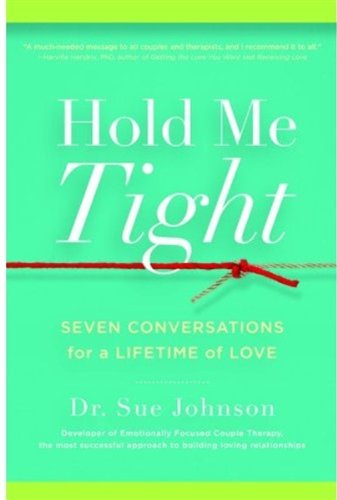
Also worth reading
Us: Getting Past You and Me
Terry Real
Terry Real's guide to moving beyond ego and individualism in relationships — a practical roadmap for building genuine partnership and lasting love.
View on Amazon →
Also worth reading
The New Rules of Marriage
Terry Real
Terry Real's straight-talking guide to modern marriage — challenging outdated relationship myths and offering a new model for mutual respect and deep connection.
View on Amazon →
Frequently asked questions
When is it too late for couples therapy?
There's no universal answer, but therapy is least effective when one person has already decided the relationship is over and is using therapy to confirm that decision rather than engage with it. If both people genuinely want to try, it's rarely too late to get something useful out of the process, even if the outcome is a more conscious ending rather than a repair.
How long does couples therapy typically take?
It varies a lot depending on what you're working on. For specific communication issues, some couples see real change in 8 to 12 sessions. For more significant issues like infidelity or years of accumulated disconnection, it often takes longer, sometimes a year or more of regular sessions. Most therapists reassess goals every few months.
Does couples therapy actually work?
Research supports it, particularly for evidence-based approaches like Emotionally Focused Therapy and the Gottman Method. Studies show meaningful improvements in relationship satisfaction and communication for couples who engage consistently. It works best when both people are genuinely trying and the therapist is trained in a structured approach.
Can I go to couples therapy alone if my partner won't come?
Yes. Individual therapy to process relationship issues is genuinely useful and doesn't require your partner's participation. Some therapists also specialize in working with one partner of a couple. It's not the same as both people going, but it's far better than doing nothing while waiting for your partner to be ready.
What's the difference between couples therapy and couples counseling?
These terms are often used interchangeably. In some contexts, "counseling" refers to shorter-term, problem-focused support, while "therapy" implies deeper and more long-term work. In practice, the distinction depends more on the specific practitioner and their approach than on the label. When interviewing a therapist, asking about their training and their approach is more useful than worrying about what it's called.
Related reading
- Therapy questions for couples. Questions designed to surface the conversations your therapist will want you to have
- How to fight fair in a relationship. The core communication skills that make conflict productive rather than damaging
- Conflict style questions for couples. Understanding how each of you is wired around conflict, which is often the starting point in therapy
Questions that prepare you for therapy
If you're heading into couples therapy, these questions can help you both get clear on what you're working on.
Therapy Questions for CouplesMore articles on relationships
Practical, honest writing about what makes relationships work and what gets in the way.
Browse All ArticlesWritten by D.J. Westbrooks. I'm not a licensed counselor, just a 50-something who's been married 28+ years and has spent years reading what actual relationship researchers (Gottman, Johnson, Nagoski, Tatkin, Hendrix, Perel) have to say about what makes marriages last. This article is built from their work, not from a clinical degree. More about how this site gets made.
This site is not therapy. If your relationship is in real trouble, talk to a licensed professional.